Diacetyl peroxide (CAS 110-22-5)
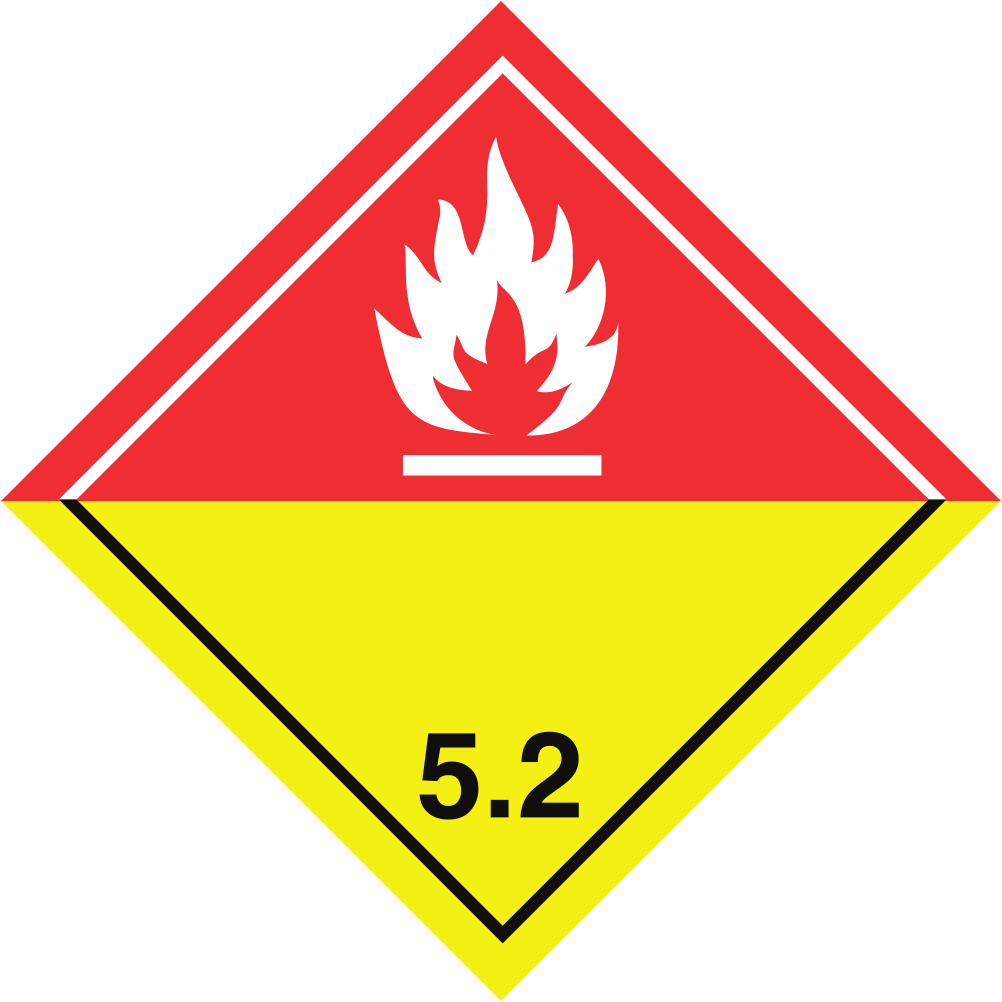
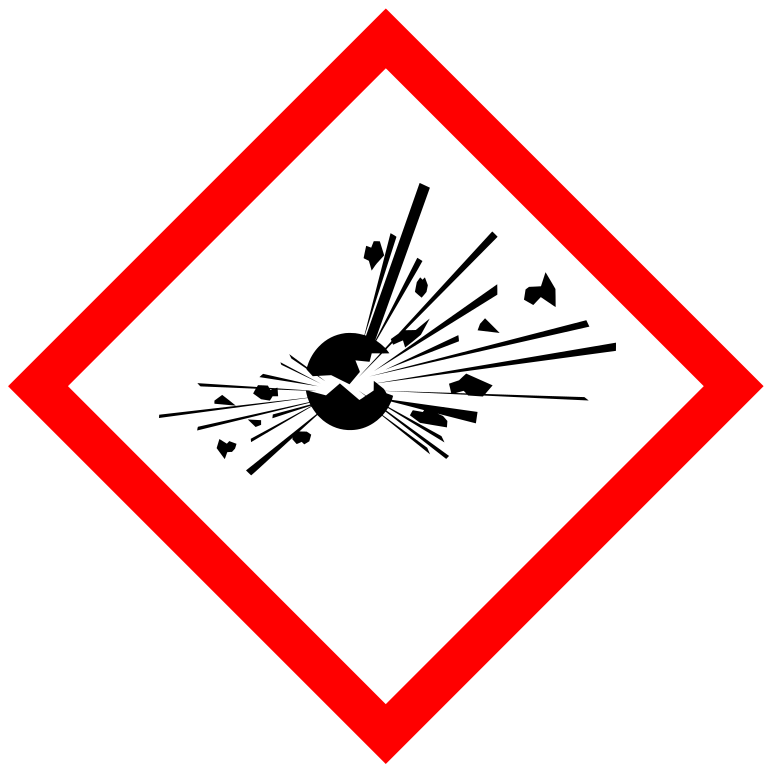
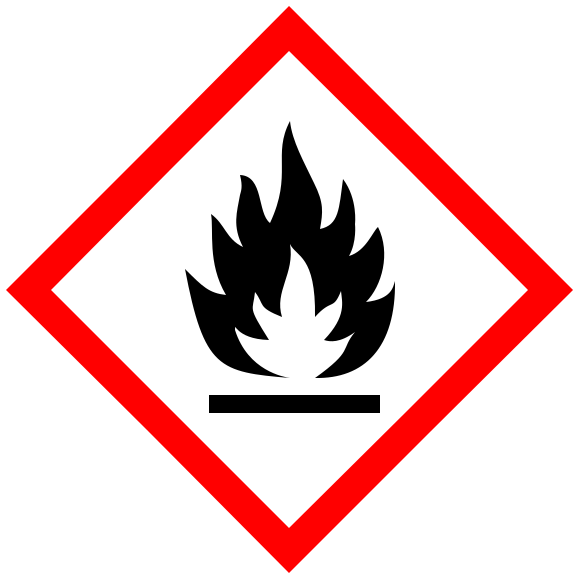
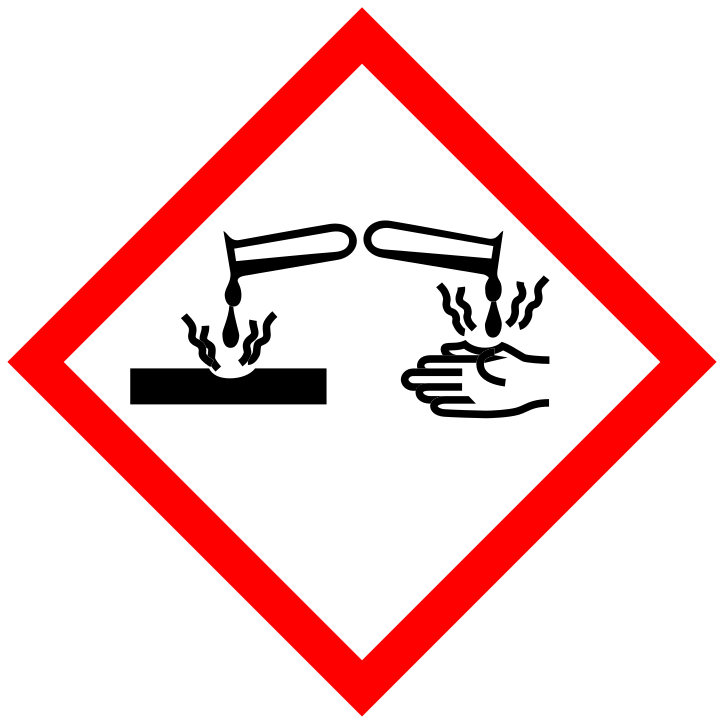

Diacetyl peroxide (CAS 110-22-5) is an organic peroxide compound with molecular formula C4H6O4 and molecular weight 118.09. Also known as Diacetyl peroxide, Acetyl peroxide, Diacetylperoxide. It typically appears in crystalline solid or solution form.
It is commonly used as a crosslinking agent or polymerization initiator in polymer processing.
Below you can find its complete physical and chemical properties, safety data, GHS hazard classifications, and a catalog of 0 products.
CAS 110-22-5 is also known as:
- Diacetyl peroxide
- Acetyl peroxide
- Diacetylperoxide
- Peroxide, diacetyl
- Acetyl ethaneperoxoate
- Ethanoyl peroxide
- Peroyl A
- Acetic peroxyanhydride
CAS Number
110-22-5
Molecular Formula
C4H6O4
Molecular Weight
118.09
EINECS Number
203-748-8
MDL Number
MFCD00008620
BRN Number
1753975
Chemical Name
Diacetyl peroxide
Last Updated
6/1/2026
Aliases
Appearance
Colorless crystals or oily liquid (pure state), commercially only available as a phlegmatized solution
Appearance State
Solid or liquid depending on purity and formulation. Slightly soluble in cold water, miscible with most organic solvents like dimethyl phthalate.
Color
Colorless
Odor
Sharp, strongly pungent odor
Form
Crystalline Solid or Solution
Melting Point
30 °C (decomp)
Boiling Point
121.4 °C @ 760 mmHg (Theoretical estimated. Highly thermal and impact sensitive in practice, starts decomposing at 30 °C and prone to explosion, normal pressure boiling point has no safety guiding significance)
Flash Point
32.2 °C
Density
1.163 g/cm³
Vapor Density
4.07 (air=1)
Vapor Pressure
14.6 mmHg @ 25 °C
Refractive Index
1.398 (predicted)
LogP Value
-0.04 (predicted)
Merck Index
Not Specified
Solubility
Slightly soluble in cold water, soluble in ethanol, ether, and dimethyl phthalate
Water Solubility
Slightly soluble (Experimental value, but high thermal decomposition risk and prone to hydrolysis, aqueous solution preparation has no practical industrial safety value)
Solubility Detail
Slightly soluble in cold water. Due to extreme explosion hazards and decomposition upon melting (30°C), storing or transporting this substance in its pure form is strictly prohibited. It must be phlegmatized and maintained as a stabilized, safe-handling solution (typically <= 25% in dimethyl phthalate) for industrial radical initiation applications.
Storage Conditions
Must be handled according to strict temperature-controlled organic peroxide standards. Ambient storage/transport is forbidden; it must be forced refrigerated between -20°C and 0°C. With an extremely low SADT (ca. 35°C), thermal runaway can easily trigger at normal summer temperatures. Store in an isolated, high-standard explosion-proof hazardous warehouse equipped with emergency pressure relief and dedicated ventilation. Avoid moisture, light, friction, and mechanical shock. Keep strictly isolated from reducing agents, acids, bases, and metal powders.
InChI Key
ZQMIGQNCOMNODD-UHFFFAOYSA-N
GHS Hazard Symbols
Hazard Class
Signal Word
Danger
Hazard Symbols
E, O, C
Risk Codes
R2, R3, R5, R8, R34
UN Number
UN 3115 (Organic peroxide liquid, Type D, temperature controlled) or UN 2084 (Depending on active oxygen content and phlegmatized state of specific formulation)
IARC Classification
Not Classified
WGK Germany
2
RTECS Number
Not Specified
Auto-ignition Temperature
ca. 35 °C (自加速分解温度 SADT)
TSCA Listed
Listed (Active)
Packing Group
II
Customs Code
2915900090
Occupational Exposure Band (OEB)
Not Specified
Occupational Exposure Limit (OEL)
Not Specified
Immediately Dangerous to Life or Health (IDLH)
Not Specified
Hazard Statements
H241, H302, H312, H314, H332Precautionary Statements
P210, P220, P234, P240, P280, P301+P330+P331, P303+P361+P353, P305+P351+P338, P370+P380+P375, P411, P501Safety Statements
S3/7, S14, S16, S26, S36/37/39, S45
No supplier information available for this chemical
Contact us if you are a supplier of Diacetyl peroxide (CAS 110-22-5)
Are you a Manufacturer or Distributor?
List your company and organic peroxide products for free to reach thousands of global buyers and engineers.